
The short answer: vacuum a wool rug every week, blot spills straight away with a white cloth and cold water, and never scrub, soak it or use hot water and household cleaners on it. Dry it flat with plenty of airflow. When the whole rug looks dull, smells, or a stain won't lift with water, it's time for a professional clean.
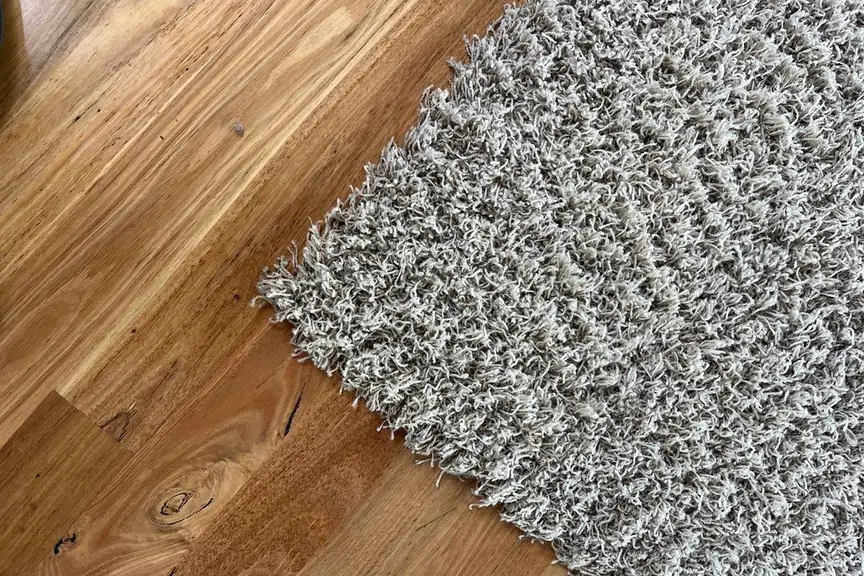
Wool is one of the easiest rug fibres to live with. Woolmark notes that wool fibres have their own natural protective layer that makes them resistant to stains and odours, which is why a spill on wool often comes out with nothing more than water and patience. The same fibre is easy to damage with the wrong treatment, though, so most of this guide is about what to leave out.
First, check what your rug is made of
Look for a label on the back or along one edge. It should list the fibre and sometimes the cleaning method the maker recommends. If the label says 100% wool or a wool blend, the steps below apply. If it lists viscose, rayon, "art silk", bamboo silk or jute, stop here. Those fibres can brown, shrink or lose their pile once they get wet, and home spot cleaning is where most of that damage starts. The same caution applies to hand-knotted Persian and oriental rugs, which are best left to a specialist rug washer.
We don't clean viscose, jute, Persian or oriental rugs ourselves, for exactly those reasons. One customer summed up how we handle it in a recent review: our technician "inspected the rugs prior and advised that he couldn't do them due to the fabric."
Routine care that keeps wool clean for longer
- Vacuum weekly, and twice a week if the rug sits in a hallway or under a dining table. The Carpet Institute of Australia calls vacuuming one of the most important cleaning steps there is, because it removes the grit that wears fibres down.
- Use suction only on shaggy or loose pile. A spinning brush bar can fluff up and pull wool, and it will chew the fringe. Turn the brush off or use the hard-floor setting, and vacuum across the fringe gently or not at all.
- Vacuum the back a few times a year. Flip the rug and run the vacuum over the underside. Grit works its way down to the base, and you'll be surprised how much comes out.
- Turn the rug every six months so traffic and sunlight fall evenly across it. Strong afternoon sun through a north or west window will fade wool over time.
- Put a mat at the door. Most of the dirt on a rug walks in from outside. The Carpet Institute recommends entrance mats for the same reason.
How to deal with a spill on a wool rug
- Act quickly. Scoop up anything solid with a spoon or a blunt knife, working from the outside of the spill towards the middle.
- Blot with a dry white cloth. Press down firmly and lift. Don't rub, because rubbing spreads the stain and roughs up the pile.
- Use cold water first. Dampen the cloth with plain cold water and keep blotting. The Carpet Institute's advice is to start with water only and a dry white cloth.
- If a mark is left, use a pH-neutral spotting product made for carpet. Test it on a hidden corner first and wait ten minutes to check the colour doesn't run.
- Blot until the area is only just damp, then lay a folded dry towel over it and stand on it for a minute to draw the last of the moisture out.
What not to use on a wool rug
- Hot water from the tap or kettle. Heat can set protein stains like blood, milk and egg, and very hot water can shrink wool.
- Laundry powder, dishwashing liquid, bleach or ammonia. Strongly alkaline products and bleach can yellow or weaken wool, and soapy residue left in the pile attracts dirt faster.
- Hard-surface sprays. The Carpet Institute says plainly not to use hard-surface cleaning products on carpet, and the same goes for rugs.
- Soaking or hosing the rug outside. A wool rug holds a lot of water. Left wet for too long, the backing can mildew and the fringe can go brown.
Drying a wool rug properly
Dry the rug flat. Lift it off the floor if you can, onto a clean outdoor table or a couple of chairs, so air reaches both sides. Open windows, run a fan, and keep it off timber floors until it's completely dry, because damp wool can mark a floor finish. Don't hang a wet rug over a clothesline. The weight pulls it out of shape and leaves a crease along the line.
A slight "wet wool" smell while the rug dries is normal and goes once it's dry. A sour or musty smell that stays is a sign moisture has been trapped in the base.
When to call a professional
Home care keeps a wool rug looking good between cleans. It won't lift the oily grey film that builds up in a busy room, and it can't reach urine that has soaked through to the base. It's time to book a clean when:
- the rug looks flat and grey in the walkways even after vacuuming;
- there's a pet accident, or a smell that comes back on humid days;
- a stain hasn't lifted with water and a neutral spotter;
- the colour has started to bleed, or you've spilled something like red wine or coffee across a large area.
Pet odour is the one we see most. One Geelong customer told us her rug "stunk from my naughty cat to the point I was ready to take it to the tip". She had paid over $800 for it, so she called us before giving up, and we cleaned and deodorised it.
How we clean wool rugs
Every rug starts with a check of the fibre and the dyes. If it's wool or a synthetic we clean, we vacuum it thoroughly, treat the marks, then clean it with hot water extraction and deodorise it if it needs it. The pile is groomed so it dries evenly. If the rug turns out to be viscose, jute, or a hand-knotted Persian, we'll tell you before we start and leave it alone. See our rug cleaning service for what's included.